

👉 Full post at DataScience@Microsoft: https://medium.com/data-science-at-microsoft/the-ai-native-engineering-flow-5de5ffd7d877
Past 3 months I’ve been running a personal experiment to test a hypothesis: Can AI agents serve as engineering co-team members? — not just code assistants, but collaborators across planning, architecture, implementation, and code reviews?
🎯 Output: A reference loan processing system deployed on Azure.
🛠️ Setup: One human. Six specialized Software Engineering AI agents.
📊 Assessment: Software engineering isn’t disappearing. It’s transforming — what we can call the “AI-native engineering flow”.
5 key insights:
1️⃣ Work redistributed, not disappeared. Strategic work — planning, architecture, security reviews — jumped to 73%. Code implementation dropped to single digits. The real unlock wasn’t “coding faster.” It was redirecting cognitive effort to what actually moves the needle.
2️⃣ “Let AI run, review later” failed fast. I assumed agents could work independently and I’d review afterward. Wrong. Active monitoring caught major issues early and enabled better design decisions.
3️⃣ nvesting early in specificaiton and context tuning for CoPilot, CLAUDE.md files, and agent personas made AI outputs dramatically more aligned. The results compounded as more documentation was created.
4️⃣ Traditional roles started collapsing. PM, UX, Engineer blurred into a broader “Product Engineer” engaging across the entire system.
5️⃣ Foundational engineering skills became MORE critical, not less. AI generates code fast — but spotting architectural drift, code smells, and security gaps requires deep engineering intuition.
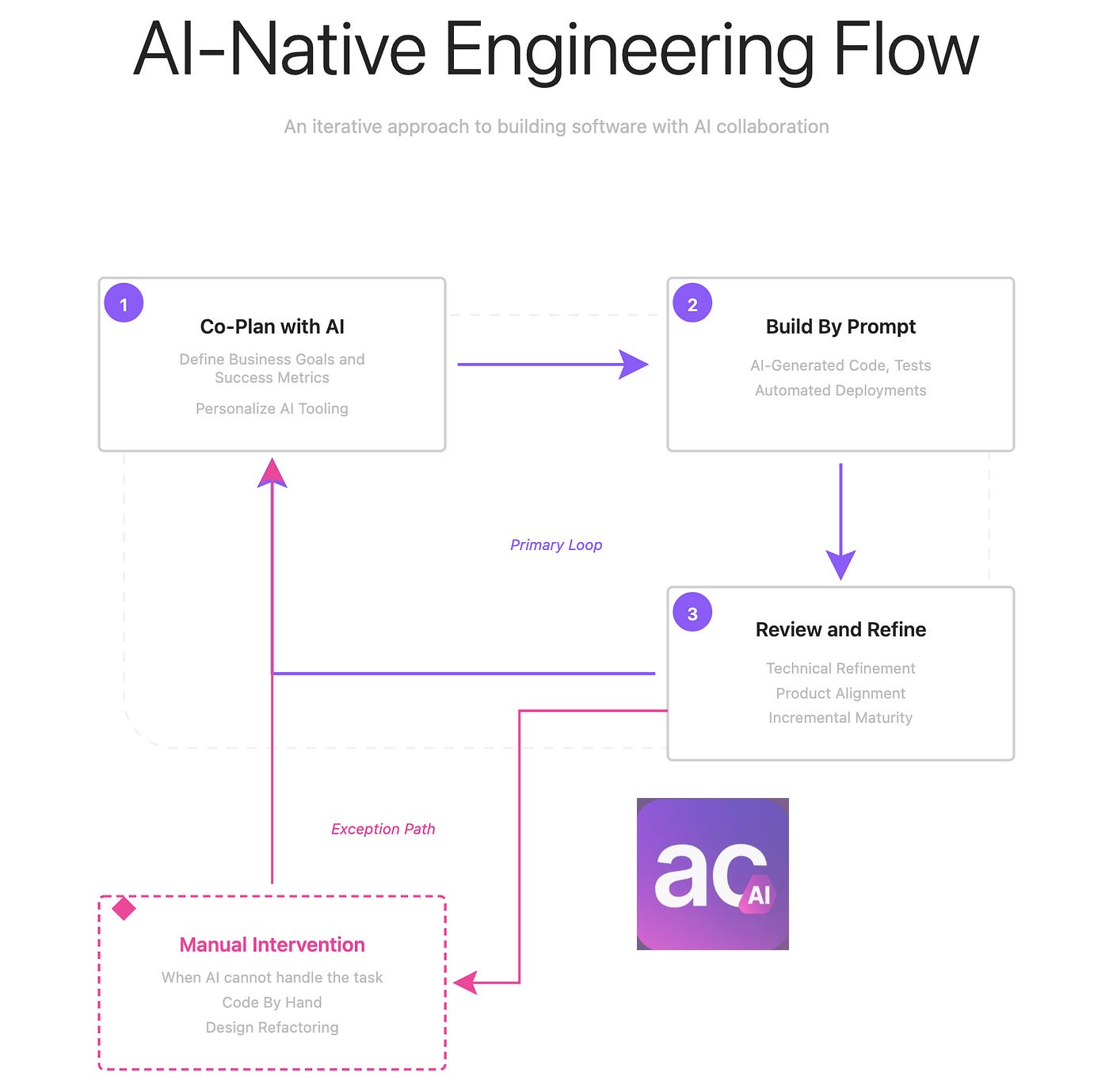
👉 Full post at DataScience@Microsoft: https://medium.com/data-science-at-microsoft/the-ai-native-engineering-flow-5de5ffd7d877